How to make money transcribing audio has a short answer: pass a typing and grammar test on a platform such as Rev or GoTranscript, pick audio files from its queue, and get paid per audio minute, not per hour you work. The honest part is the rate. Beginners often earn well under $15 an hour once you count the time each file actually takes, because one minute of audio takes several minutes to type. This guide compares seven places that pay, with the pay rates they published in October 2026, and the maths to work out what an audio hour is really worth to you.
How transcription pay actually works
Almost every platform pays per audio minute. That means you are paid for the length of the recording, not for the time you spend on it. GoTranscript spells this out on its own jobs page: an audio minute is the length of the file. So a 10-minute interview at $0.40 a minute pays $4, whether it takes you 30 minutes or 50 minutes to type.
That gap is the whole story. Middlebury’s research methods guide puts careful manual transcription at 4 to 8 hours of work per hour of audio. Clean audio and practice pull you toward the low end. Accents, crosstalk and background noise push you toward the high end. A rate that looks fair per minute can still be a low hourly wage, and the only way to know is to time yourself on a real file.
There is no fee to join any of the platforms in this guide. That is the first test of a real one. If a site charges you to apply, sells you a starter kit, or offers to sell you an approved account, walk away. The real platforms test you, then let you pick work from a queue.
Compare the seven places before you pick one
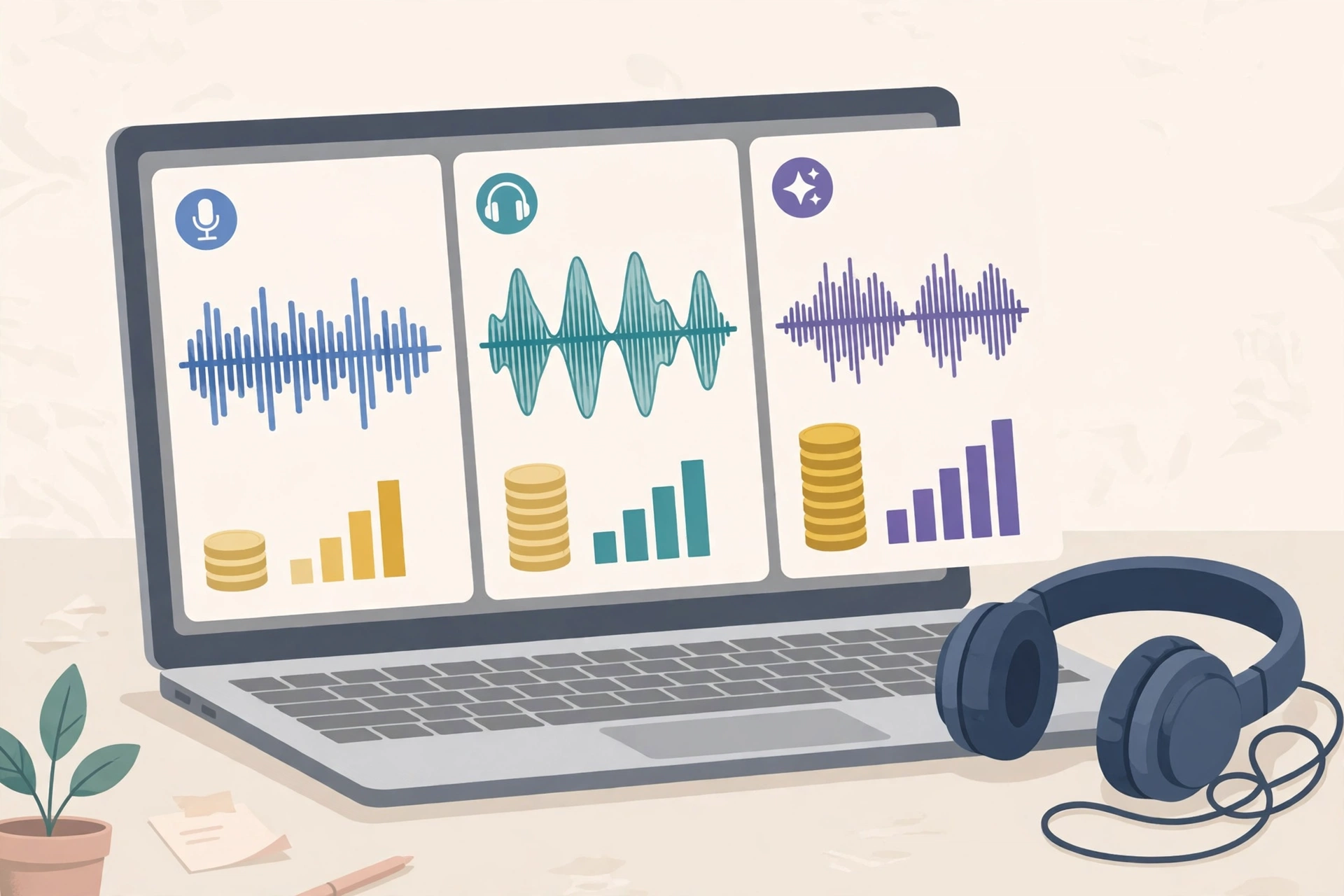
Practical comparison, not a ranking of expected earnings
| Platform | Pay published | How you are paid | Best for |
|---|---|---|---|
| Rev | $0.40 to $1.10 per audio minute | Weekly, PayPal | Beginners with strong English |
| GoTranscript | From $0.65 per audio minute, up to $1.75 | Weekly on Fridays, PayPal or Payoneer | Beginners, many languages |
| TranscribeMe | $15 to $22 per audio hour | Regular payouts | Short tasks in spare minutes |
| Speechpad | $0.25 to $2.50 per audio minute | Twice a week, no minimum | Variety of job types |
| Wordibly | $0.18 to $0.65 per audio minute | Twice a month, PayPal or Payoneer | Editing AI drafts |
| Daily Transcription | $45 to $66 per hour of material | Contractor, 10 to 30 hours a week | Experienced transcribers |
| Direct clients and marketplaces | You set the rate | Per project, as agreed | Higher pay once you have a track record |
All pay figures in this guide were read on the companies’ own pages on 26 October 2026 and are quoted as published then. Rates change, and two of these platforms were not taking new applicants freely at that date, so check the live jobs page of any platform before you apply. The table hides the real choice, which is between a steady queue at a low rate and a higher rate you have to find yourself.
One warning applies to every row. The per-minute rate is not your hourly wage. At $0.40 a minute, one audio hour pays $24. If it takes you four working hours, that is $6 an hour. If it takes six, it is $4. Speed is the only raise this work offers at the start, and the worked example later in this guide shows the sums for each rate.
Seven places to make money transcribing audio
1. Rev
Rev is the best-known transcription company, and the easiest to explain. It hires freelancers for four roles: transcriptionist, captioner, subtitle translator and legal transcriptionist. The pay published on its freelancer page on 26 October 2026 was $0.40 to $1.10 per audio or video minute for transcriptionists, $0.54 to $1.10 for captioners, $1.70 to $4.00 or more for subtitle translators depending on the language, and $0.55 to $2.00 or more for legal transcriptionists. Rev pays weekly via PayPal for approved work.
To apply, you pick a role, complete a short skills assessment in English and grammar, then submit a short transcription sample. Rev says there is no minimum commitment once you are approved. The catch, checked on the same date, is that Rev has a waitlist “due to high application volume”, so you may not get in straight away. Apply to more than one platform and do not wait on Rev alone. The legal role suits people who know legal terms, and the subtitle role pays the most here, but both need a test in that specialty.
2. GoTranscript
GoTranscript hires in more than 140 languages, which makes it one of the few options if your strongest language is not English. With English selected, its jobs page showed from $0.65 per audio or video minute on 26 October 2026, with a headline rate of up to $1.75 a minute. The same page listed average monthly earnings of $1,170 and top active monthly earnings of $3,250. Rates change by language, and the average figure is not what a beginner earns, so treat it as a ceiling, not a promise.
To apply, you read the guidelines, take a short language-specific test, and wait for review. Each extra language needs its own test, and there is no application fee. Payments are weekly, on Fridays, via PayPal or Payoneer. One thing to check before you apply: on 26 October 2026 the site’s banner said it was open, while its application form said it was not accepting new transcribers. That status may have changed since, so look at the live form, not the banner. GoTranscript also warns never to buy or sell an account, and applying yourself is the only way in.
3. TranscribeMe

TranscribeMe splits recordings into short clips of 2 to 4 minutes. When you finish one, the system gives you another, which makes it the best fit in this guide for spare minutes rather than long sittings. Its jobs page lists earnings of $15 to $22 per audio hour to start, with top monthly earnings of $2,200 and average monthly earnings of $250, by its own numbers. Medical and specialty teams pay more.
That $250 average is the honest figure to plan around. At $15 to $22 per audio hour, it works out to about 11 to 17 audio hours a month, and each audio hour takes several working hours, so treat it as practice that pays rather than a wage. Joining is free, with an exam and training before you touch paid work. One trap to avoid: some 2026 lists say TranscribeMe pays “$0.79 per minute”. On TranscribeMe’s own site, $0.79 per minute is the price customers pay for transcription. It is not what transcribers earn.
4. Speechpad
Speechpad hires transcribers, captioners and translators, and lets you pick your own jobs from its list. Its worker page showed transcriber pay of $0.25 to $2.50 per minute on 26 October 2026, and translator pay of $2.00 to $5.00 per minute. Speechpad says priority, audio quality and language affect the rate, and it pays twice a week with no minimum earnings.
The range is the widest in this guide, and that is both the point and the problem. The low end, $0.25 a minute, is very low: one audio hour at that rate pays $15, and at four working hours that is under $4 an hour. The high end is only reached on priority or specialist files. Speechpad suits someone who wants to try different types of work, including captioning and translation, without a minimum hours commitment. You need a computer and an internet connection, and there is no upfront cost to apply.
5. Wordibly

Wordibly posts jobs on its “Word Hub”, and you claim the ones you want. Its transcriber page showed rates from $0.18 per audio minute for AI-assisted work to $0.65 per minute on 26 October 2026, with higher rates for foreign-language translation. Payment is twice a month by PayPal or Payoneer. To apply, you take a grammar and typing test, and Wordibly says it will tell you the result within two weeks.
Wordibly matters because it is open about where the industry is going. The $0.18 rate is for editing an AI draft, not typing from scratch, and it is the lowest rate in this guide. But editing drafts is also the fastest-growing kind of work on these job pages, and it is a skill worth learning early. Wordibly suits a beginner who wants practice editing AI drafts and does not mind starting at the bottom of the pay scale to learn it. If you take this route, track how fast you can clean a draft, because that speed decides whether the low rate is worth your time.
6. Daily Transcription

Daily Transcription works for entertainment, corporate, legal and academic clients, and it pays the most per hour of material in this guide. Its careers page listed General Transcription at $45 to $66 per hour of material on 26 October 2026, and an AI Editor role, editing AI-generated transcripts, at $60 to $90 per hour of material. Both are independent contractor roles of 10 to 30 hours a week. The General Transcription role asks for at least 50 words per minute.
The catch is experience. Both roles ask for 1 to 2 years of it, and the work is for native English speakers. That makes Daily Transcription a second step, not a first one: start on an entry platform, build a clean accuracy record, then apply here. Note the address too. Some lists still link to an old Daily Transcription jobs URL that now returns a 404. The live page is dailytranscription.com/careers, so use that one and ignore the old link if you see it quoted elsewhere.
7. Direct clients and freelance marketplaces

The seventh option is not a platform queue at all. Once you have three to six months of experience and a clean accuracy record, you can pitch directly to the people who need transcripts: podcasters, market research agencies, law firms, documentary makers and university researchers. You can also build a profile on a freelance marketplace such as Upwork or Fiverr and bid per project. You set the rate, and there is no queue handing you files.
The ceiling is higher and the floor is gone. Marketplace listings for transcription run from a few dollars an hour to $75 an hour for specialist work, and a strong portfolio with a niche is what unlocks the top end. The practical way in is to offer the workflow clients now expect: run the file through an AI tool first, then spend your time on the edit, checking names, numbers and terms the draft got wrong. If you want steadier client work beyond transcription, learning to work as a virtual assistant uses the same skills and opens up more kinds of jobs from the same clients.
How AI is changing the work, not ending it
The job is shifting from typing to editing. Speech recognition now produces a first draft in seconds, and the human adds what machines miss: judgment on unclear audio, correct names and terms, and the right format. You can see the shift on the job pages themselves. Rev’s legal role includes “edit draft”. Wordibly has an AI-assisted rate. Daily Transcription hires an AI Editor and pays it more than general transcription.
The official outlook is cautious rather than bleak. The US Bureau of Labor Statistics lists a median pay of $40,410 a year, or $19.43 an hour, for medical transcriptionists in May 2025, and projects the role to fall 4% from 2025 to 2035 as speech recognition lets doctors document visits in real time. It still expects about 6,200 openings a year as people retire or change jobs.
For a beginner, the practical lesson is to learn editing, not just typing. Practice fixing AI drafts, learn the difference between verbatim and clean verbatim, and get comfortable with speaker labels and timestamps. Those are the skills the higher-paying roles in this guide ask for, and they are the skills a direct client will pay for when an AI draft alone is not good enough.
Check what one audio hour really pays
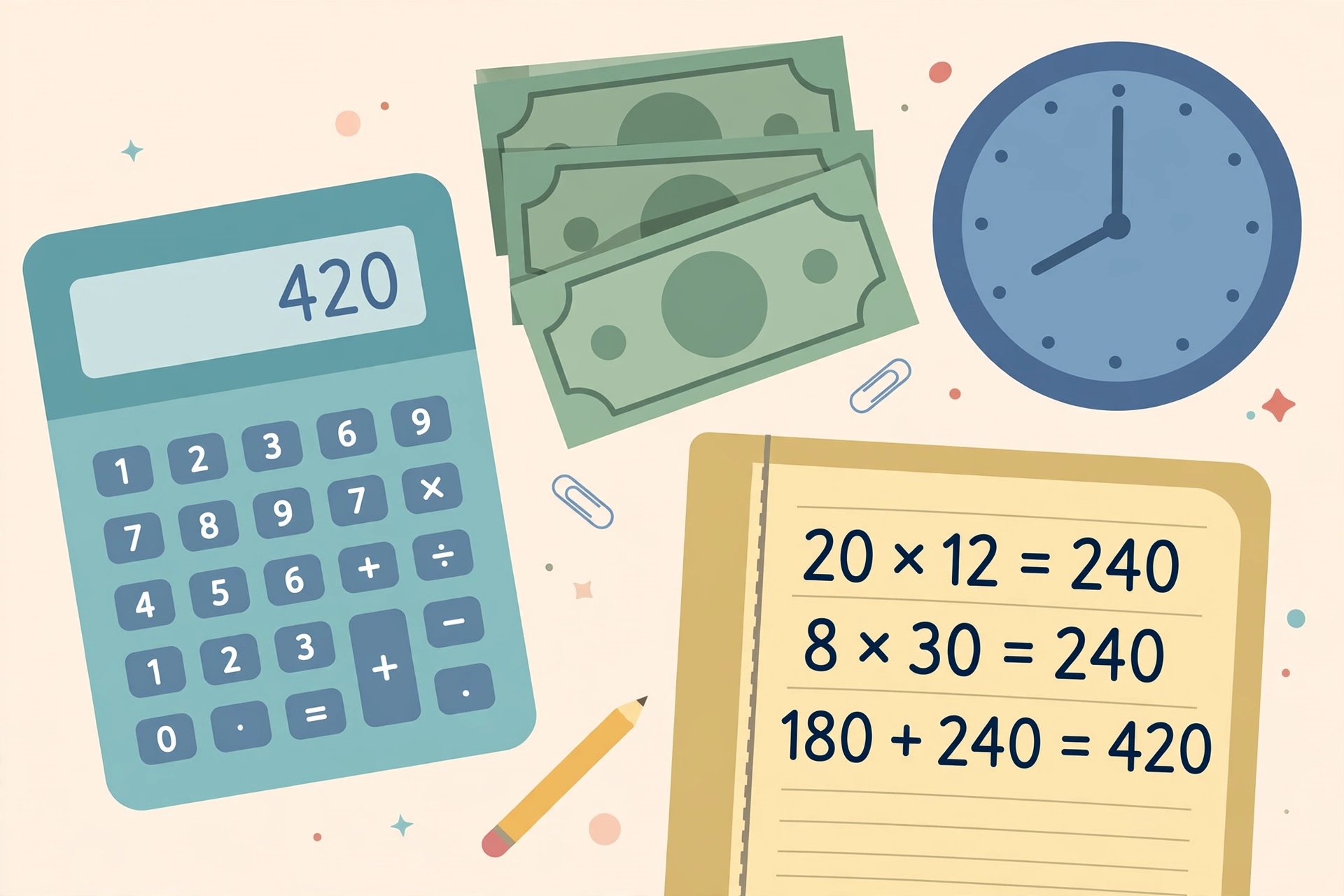
Take one hour of audio at Rev’s entry rate of $0.40 a minute. That is $24 for the audio hour. If it takes you four working hours to transcribe it, your real rate is $6 an hour. If it takes six working hours, it is $4 an hour. The file pays the same either way, so every minute you save by typing faster or editing an AI draft goes straight into your hourly rate.
Now the variant at Rev’s top rate of $1.10 a minute. One audio hour pays $66. At four working hours, that is $16.50 an hour. At three working hours, it is $22 an hour. Same file, same platform, very different wage, and the only difference is speed and accuracy. That is why the guides that quote a per-minute rate without the time it takes are not giving you the full picture.
One more sum, for a week of steady work. At GoTranscript’s entry rate of $0.65 a minute, one audio hour pays $39. Ten audio hours in a week is $390 gross. If each audio hour takes four working hours, that is 40 working hours for $390, or $9.75 an hour. This is an illustrative example with assumed inputs, not a promise of what you will earn: work is not always available, files vary in difficulty, and platforms grade your work and can hold pay for files that fail their checks. Run the same sum with your own speed and the rate you actually get, before you decide what the work is worth to you.
Test transcription work in five steps
A planning example, not a deadline or an earnings promise
- Test your typing speed and accuracy. Many roles want 50 words a minute or more, and most transcribers aim for 60 or more with few errors. If you are below 50, practise first, because speed is what turns a low per-minute rate into a liveable hourly one.
- Learn the two styles before you take a test. Verbatim keeps every pause and filler word. Clean verbatim removes the “um” and “uh” and false starts. Rev, GoTranscript and Wordibly all test grammar and guideline use, so read the style guide of the platform you are applying to before you sit the test, not after.
- Apply to three platforms at once. Rev was on a waitlist and GoTranscript’s form was not accepting new transcribers on 26 October 2026, so a single application can leave you waiting. TranscribeMe takes short clips and is the easiest to start on while you wait. If you need a small budget for good headphones or a foot pedal, short paid tasks such as get paid to test websites can cover it.
- Do one paid test file and time yourself from start to finish. Note the audio length, the rate, and how long it took, then work out your real hourly rate with the sums in this guide. If the rate is under $6 an hour at your current speed, practise on clean audio and learn keyboard shortcuts before you take on harder files.
- Track your real hourly rate every week, and move up when the numbers justify it. After three to six months with a clean record, apply to Daily Transcription or pitch direct clients, where the rates are higher. If you want to build a wider freelance income around the same skills, read our guide to freelance work.
Frequently asked questions
How much can a beginner earn transcribing audio?
At the published entry rates in this guide, a beginner often earns well under $15 an hour. One audio hour at Rev’s entry rate of $0.40 a minute pays $24, which is $6 an hour if it takes four working hours and $4 an hour if it takes six. Speed, clean audio and moving up to specialist work are what raise the rate.
Do I need experience to start transcribing?
No, not for the entry platforms. Rev, GoTranscript, TranscribeMe, Speechpad and Wordibly accept beginners who pass their tests. Daily Transcription asks for 1 to 2 years of experience. What the entry platforms do ask for is strong English grammar, accurate typing, and the ability to follow a style guide. A typing speed of 50 words a minute or more is the usual starting point.
Will AI replace transcription jobs?
It is replacing typing from scratch, not the need for accuracy. Speech recognition makes the first draft, and the growth is in editing AI drafts, checking names and terms, and specialist work such as legal and medical transcription. The Bureau of Labor Statistics projects medical transcriptionist jobs to fall 4% from 2025 to 2035, while still expecting about 6,200 openings a year. Learn to edit drafts well and the work is still there.
Is Scribie still hiring transcribers?
Check before you apply. Scribie’s jobs page returned a “Page Not Found” on 26 October 2026, although Scribie still sells transcription services. Some 2026 lists still recommend applying there, but there was no live page for transcribers to apply on at that date. If the page is back, read its pay terms carefully before you spend time on its test.
How do I avoid transcription scams?
Never pay to apply, never pay for a starter kit, and never buy an approved account. A real platform charges no fee, tests you, and pays you through PayPal or Payoneer on a published schedule. Anyone offering to sell you an account is breaking the platform’s rules, and you can lose your pay. If a listing promises a set monthly income with no rate, no audio length and no hours attached, it is not evidence.
The bottom line
Transcription is real work that pays, but it pays by the audio minute, and the audio minute is not your hour. Start on an entry platform, time yourself honestly, and learn to edit AI drafts, because that is where the work is moving. After a few months with a clean record, move up to specialist roles or direct clients, where the rates are high enough to be worth your time. If the maths in this guide works for your speed, you have a side income worth building on. If it does not, you know the number before spending any more time on it.
Sources and editorial notes
Platform pay rates were checked on 26 October 2026 against the companies’ own jobs pages: Rev transcriptionist $0.40 to $1.10 per audio minute, captioner $0.54 to $1.10, subtitle translator $1.70 to $4.00 or more, legal transcriptionist $0.55 to $2.00 or more, weekly PayPal, with a waitlist “due to high application volume”; GoTranscript from $0.65 per audio minute in English up to $1.75, average monthly earnings $1,170 and top active monthly earnings $3,250, weekly on Fridays via PayPal or Payoneer, hiring in more than 140 languages; TranscribeMe $15 to $22 per audio hour, average monthly earnings $250 and top monthly earnings $2,200, in 2 to 4 minute clips; Speechpad $0.25 to $2.50 per audio minute for transcribers and $2.00 to $5.00 for translators, paid twice a week with no minimum.
Wordibly $0.18 per audio minute for AI-assisted work to $0.65 per minute, paid twice a month by PayPal or Payoneer; Daily Transcription General Transcription $45 to $66 per hour of material and AI Editor $60 to $90 per hour of material, contractor roles of 10 to 30 hours a week asking for 1 to 2 years of experience; Middlebury’s research methods guide at 4 to 8 hours of work per hour of audio; and the US Bureau of Labor Statistics median pay for medical transcriptionists of $40,410 a year or $19.43 an hour in May 2025, with a projected 4% decline from 2025 to 2035 and about 6,200 openings a year.
Platform pay and hiring status change often, so confirm the live figures on each platform’s own jobs page before you apply.
Sources:
- Transcription jobs compared, pay checked 26 October 2026, iamtypist.dev
- Transcription jobs 2026, pay checked 26 October 2026, WhipScribe
- Transcription jobs for beginners, pay breakdown, Lilach Bullock
- What transcriptionists do, BLS pay data checked 26 October 2026, iamtypist.dev
Revised on 26 November 2026 using the platform and labour-statistics sources linked above. It doesn’t report hands-on income results. All images are AI-generated editorial illustrations created for Plioty. Read our editorial process or send a correction.