Yes, you can get paid to test websites. Companies pay ordinary people to click through their websites and apps while thinking aloud, and platforms like UserTesting and Userlytics pay testers through PayPal. Expect roughly $50 to $150 a month as a casual tester, not a salary. The work is real. The money is modest. And the part nobody tells you is that qualifying for tests matters far more than signing up.
How website testing works
A company is about to launch a new checkout page, or redesign its app. Before it goes live, it wants to watch a real person use it. That is where you come in.
You get a short task list. Find a product and add it to the cart. Try the search bar and say what confused you. Talk through every step while your screen and microphone record. Then you answer a few written questions and submit. That is the whole job.
There are two formats. Unmoderated tests are recorded on your own time, last 15 to 30 minutes, and pay $5 to $20 each. Moderated sessions are live video calls with a researcher, last 30 to 60 minutes, and pay $30 to $90 or more. The live ones pay best, but they are rarer, and they usually go to testers with specific jobs or buying habits.
One warning from experience: never test on a device that holds sensitive work files, and read the privacy policy before your first paid test. You are recording your screen. Know what the platform stores.
Compare website testing platforms by the work involved
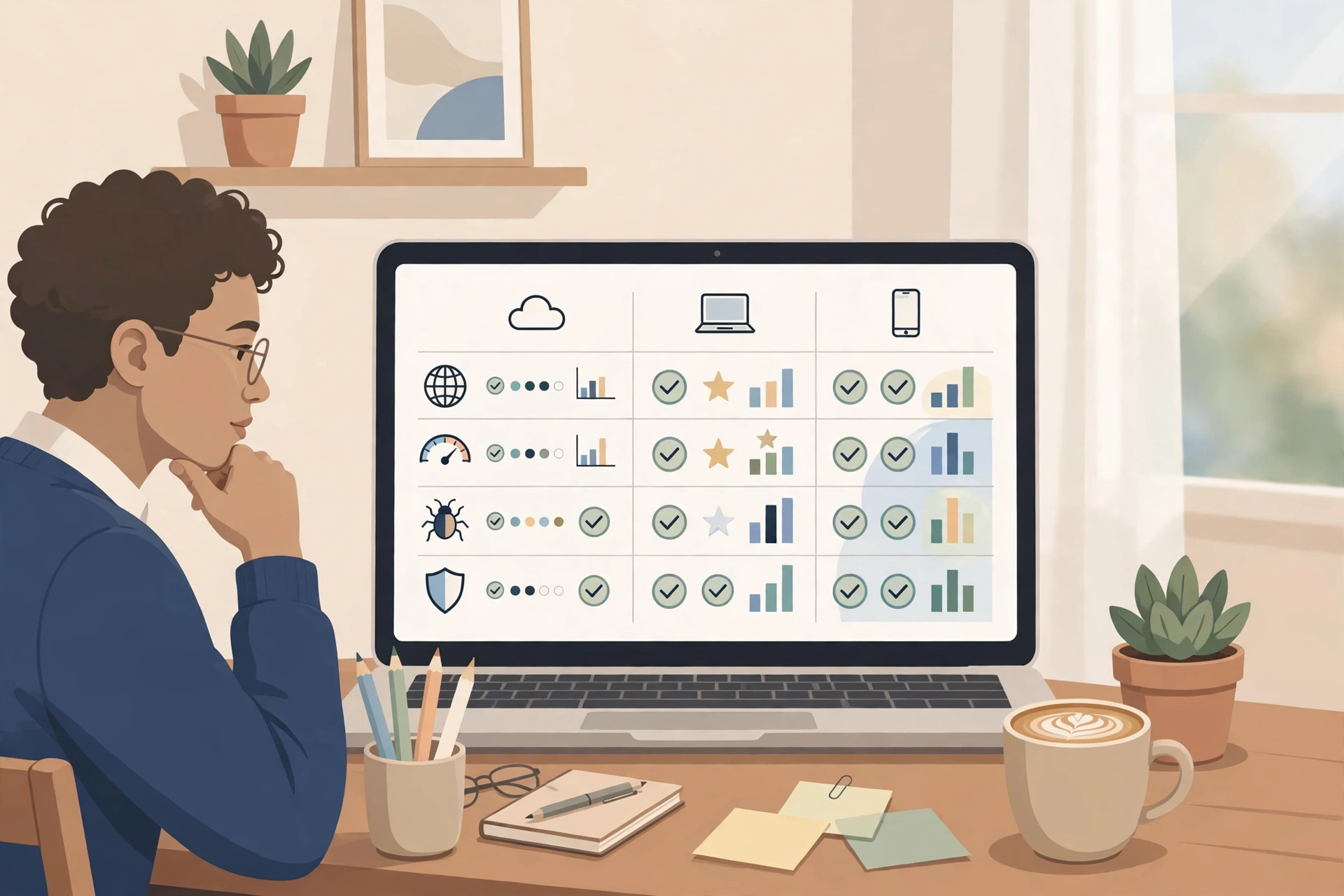
Start with the type of work you are willing to do. A recorded test fits around other commitments, while a live interview pays more but needs a fixed time slot and a quiet room.
Practical comparison, not a ranking of expected returns
| Platform | What you do | Typical pay | How you get paid |
|---|---|---|---|
| UserTesting | Recorded tests + live conversations | $10 per 20-min test; $30–$60 live | PayPal, ~14 days |
| Userlytics | Recorded tests + moderated sessions | $5–$20 per test; $30–$90 live | PayPal, every 2 weeks |
| User Interviews | Moderated interviews | $60–$100 per hour | PayPal or gift card |
| TestingTime | Moderated studies | Per session, varies | PayPal or bank transfer |
| Trymata | Recorded tests | $10–$30 per test | PayPal |
| uTest | Bug hunting and test cases | Varies by bug severity | PayPal or Payoneer |
| Userfeel | Recorded tests, many languages | Priced by time involved | PayPal |
What you need to start is simple: a laptop or a smartphone, a built-in microphone that sounds clear, steady internet, and a PayPal account, because almost every platform pays through PayPal. For moderated sessions, add a webcam and a quiet room. Before you sign up, check one thing: does the platform accept testers from your country, and how does it pay? Every platform below accepts testers worldwide and pays through PayPal, so you will need a PayPal account linked to your bank account. Payouts arrive in dollars, so check your bank’s exchange rate and any fees — they take a small slice.
Seven legit sites that pay you to test websites
1. UserTesting
The biggest name in the field, running since 2007, with Fortune 500 clients. A standard 20-minute test pays $10. Live conversations pay $30 to $60, and some longer ones reach $120. Payment lands in PayPal about 14 days after an approved test, and there is no minimum payout.
The catch is the practice test. You record a sample test when you sign up, and a reviewer approves or rejects it within a day or two. Speak your thoughts out loud the whole time. Silence is the most common reason beginners fail. If you get rejected, most platforms let you retry after a wait.
2. Userlytics
The strongest alternative if UserTesting sends you few tests. Unmoderated tests pay $5 to $20, moderated sessions pay $30 to $90, and payouts go through PayPal every two weeks. It accepts testers from more countries than UserTesting, which helps you get matched more often.
3. User Interviews

This one pays the most per hour, because it focuses on moderated interviews rather than quick recorded tests. Its own incentive research shows $60 to $100 an hour is common for remote consumer interviews, and business-to-business sessions pay more. The trade-off is volume. You will not get an interview every day. But one good interview can pay more than a week of short tests.
4. TestingTime
TestingTime runs moderated studies, usually 30 to 60 minutes, and pays per session. It is smaller than UserTesting, but its tests are well organised and it is confirmed legit in 2026. Good as a second or third platform in your rotation.
5. Trymata
Formerly TryMyUI, Trymata is known for steady test volume. Tests typically pay $10 to $30 and take around 20 minutes. It is a solid backup when your main platforms go quiet for a few days.
6. uTest
uTest suits people who enjoy finding bugs. Instead of narrating your thoughts, you hunt for functional problems in websites and apps and report them. Pay varies by bug severity. If you have a sharp eye for broken links and glitchy buttons, this can pay better than standard usability tests.
7. Userfeel
Userfeel is simple and beginner friendly, and it is one of the better options for non-English speakers, since it runs tests in many languages. Sessions are priced by time involved. It will not make you rich, but it is an easy first platform while you wait for UserTesting approval.
How much can you really earn?

Here is the honest math, based on published pay rates and tester reports. A casual tester on one or two platforms, doing two to five hours a week, earns about $50 to $150 a month. An active tester across three to five platforms, checking the dashboard daily, can reach $200 to $500 a month, but it takes real effort and a bit of luck with screeners.
Work it out by the hour. A $10 test takes about 20 minutes, plus roughly 10 minutes answering screening questions first. That is $10 for 30 minutes of your time, or about $20 an hour while you are working. But screening rejects about half of all attempts for most testers, so the effective rate across the whole hour — including the screeners you fail — is closer to $10 an hour. If you qualify for two $10 tests in an hour with no failed screeners, the same hour is worth $20. The difference is matching, not effort. These are illustrative examples, not a promise of what you will earn.
Why the wide range? Tests are first come, first served, and every test starts with screening questions. If you do not match the target audience, you do not get the test. A tester with a complete profile, several devices listed, and varied interests gets matched far more often than someone who filled in two fields and stopped.
Do not believe anyone promising $600 a month from testing alone. That number comes from selling a course, not from testing.
Get paid to test websites more often
Most beginners quit because the tests stop coming. Here is what actually fixes that.
- Finish your profile completely. List every device you own, your job, your interests, the apps you use, and the things you buy. More detail means better matching, and matching decides everything.
- Treat the practice test like a job interview. Test your microphone first. Speak clearly. Explain what you are thinking, even when it feels obvious. Say things like “I expected the button here, but I had to scroll to find it.” That is the feedback companies pay for.
- Turn on notifications everywhere. Tests fill up in minutes. Keep email and app alerts on and check your dashboard a few times a day.
- Be specific in your feedback. “It is good” earns you nothing. “The checkout confused me because the total only appeared on the last step” is the kind of line that gets you invited back.
- Use three to five platforms, not one. When UserTesting is quiet, Userlytics or Trymata might have work. Spreading out is the only reliable way to smooth out the gaps.
Scams to avoid

The rule is simple. Real research platforms pay you. You never pay them. If a site asks for a joining fee, a training fee, or a deposit before you can test, walk away.
Other red flags: a platform that only pays in gift cards for a vague “premium” tier, a recruiter who contacts you on WhatsApp asking for bank details, or a site with no public reviews and no named company behind it. Stick to the seven above, and check Trustpilot or recent tester reviews before trying anything new. An FTC guidance on spotting job scams can help you cross-check a platform before you sign up.
A 7-day plan to your first payout

A planning example, not a deadline for earning money
| Day | What to do |
|---|---|
| Day 1 | Sign up for UserTesting and Userlytics and complete every profile field honestly |
| Day 2 | Record your practice test in a quiet room and test your microphone first |
| Day 3 | Sign up for User Interviews and Trymata while you wait for approval |
| Days 4–7 | Check each dashboard twice a day and claim every test you qualify for |
If you follow that, your first $10 test usually lands within the first week, and the PayPal payout follows about two weeks later. It is a small amount. But it proves the system works, and from there you can decide whether to add more platforms or move on to something with a higher ceiling, like freelancing from home or other low-effort income ideas.
Frequently asked questions
Is website testing legit?
Yes. UserTesting, Userlytics, User Interviews, and the other platforms listed here accept testers worldwide and pay through PayPal. You need a PayPal account linked to your bank account.
Do I need experience or a degree?
No. Companies want ordinary users, not experts. Clear speech, a working microphone, and the habit of thinking aloud matter far more than qualifications.
How much do beginners actually earn?
Casual testers earn roughly $50 to $150 a month. Active testers across several platforms can reach $200 to $500, but that takes daily effort and depends on how many tests you qualify for.
Can I do this on my phone?
Yes. Most platforms have mobile tests, and some tests are mobile only. A laptop helps for desktop tests, which pay the same but are more common.
The bottom line
Getting paid to test websites is real, beginner friendly, and free to start. Pick two platforms today, pass the practice test, and give it a month before judging it. If the tests keep coming, it is a genuinely useful side income. If they do not, you have lost nothing but a few evenings, and you will know exactly why.
Sources and editorial notes
Pay rates and platform details were checked against the linked platform pages on 21 November 2026. This article doesn’t report hands-on testing results. The featured image is an AI-generated editorial illustration. Read our editorial process or send a correction.
3 thoughts on “Get Paid to Test Websites: 7 Legit Sites That Actually Pay”